


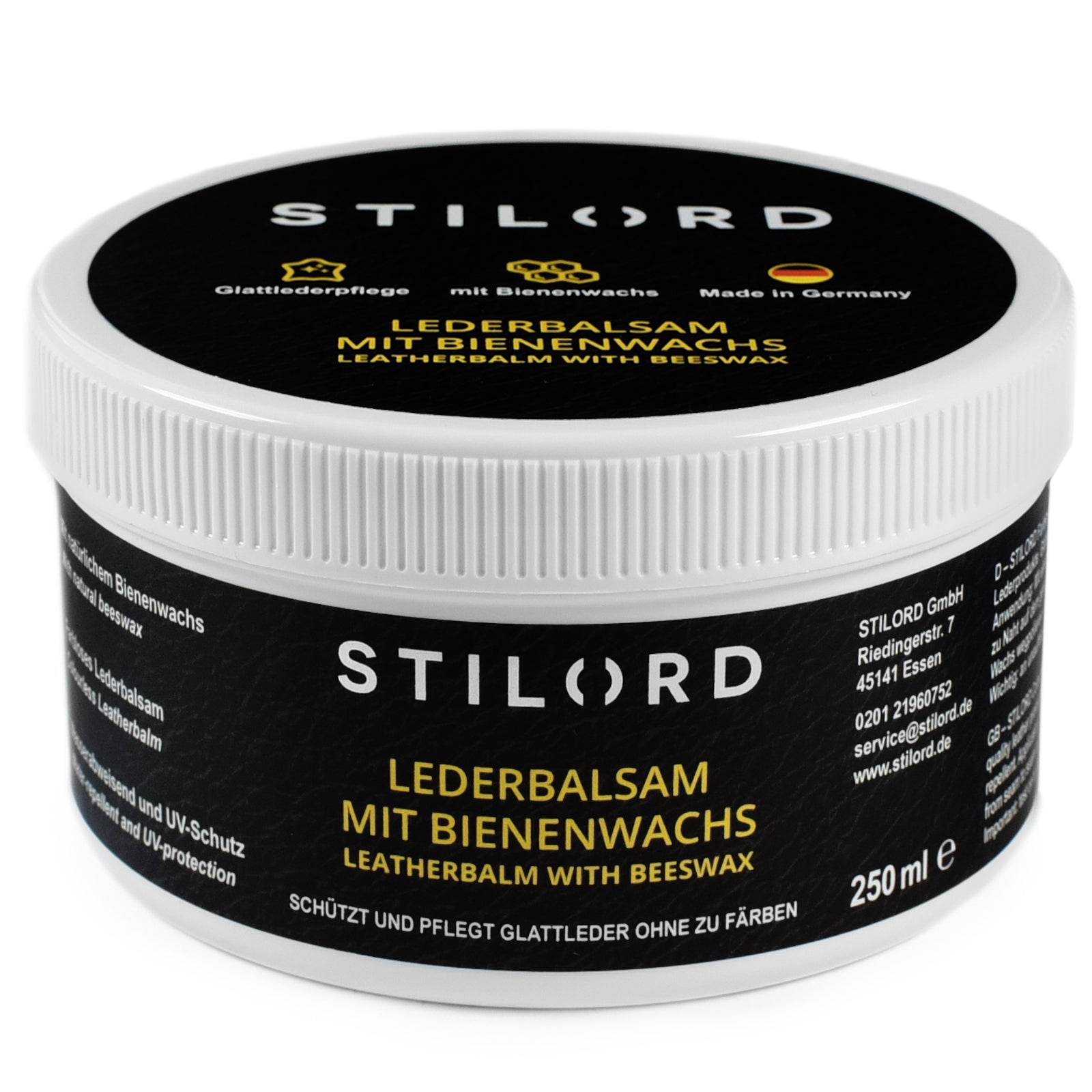
Genuine leather is one of the most rewarding and durable materials. With the right care, it remains supple, beautiful and resistant for many years. Three measures are essential: waterproofing protects against moisture and dirt, conditioning keeps the leather supple, and the right cleaning preserves the material when stains and dirt occur.

Apply evenly
Apply all care products evenly over the entire leather surface – this ensures complete and effective protection.

Give it time
Always allow waterproofing spray and leather grease to fully absorb before using or storing the item.

Good to know
Always clean leather before applying care products and then let it dry naturally in the air – never with heat.
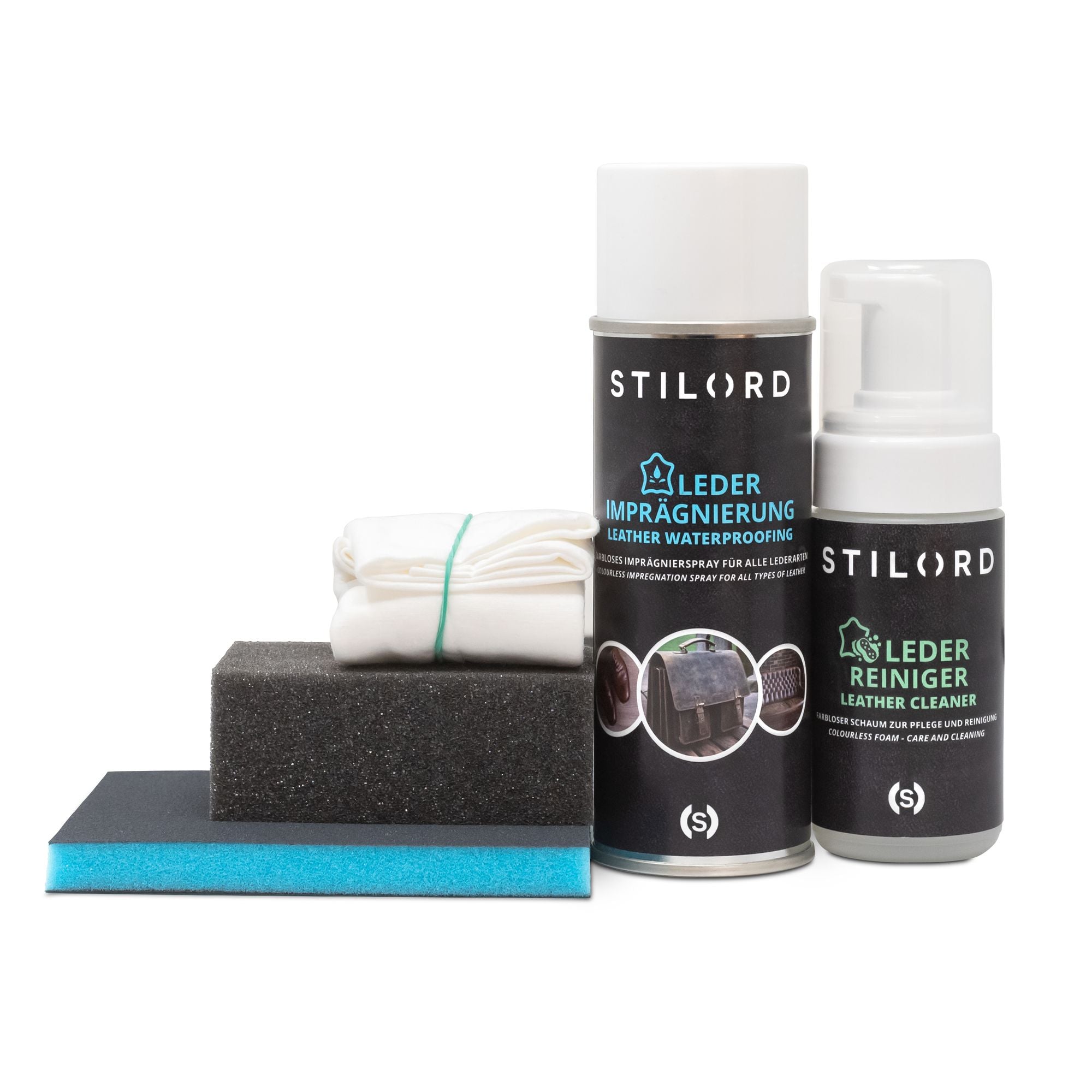
Waterproofing leather
Why waterproof leather?
Leather is a natural product with pores that can absorb moisture. Without protection, your leather bag is exposed to rain, dirt, heat, cold and UV radiation. You should waterproof your leather before using it for the first time.

Step 1: Clean the leather
Remove coarse dirt before waterproofing so the product can absorb properly.

Step 2: Spray evenly
Hold the waterproofing spray about 30 cm away and spray the entire surface evenly. Spray applied too close to the leather can leave unsightly water stains.

Step 3: Repeat the process
Repeat the process two to three times to cover all areas completely. It is best to do this outdoors or on a balcony.

Step 4: Let the leather dry
Allow the waterproofed leather to dry completely before using or storing it. This is the only way for the spray to develop its water-repellent effect.
Conditioning leather
Why condition leather?
During the tanning process, the natural fats are removed from the raw hide. The leather therefore needs to be reconditioned. Through everyday use, it loses this protection – causing brittleness and cracks.
Step 1: Clean thoroughly
Remove coarse dirt before waterproofing so the product can absorb properly.

Step 2: Apply grease evenly
Hold the waterproofing spray about 30 cm away and spray the entire surface evenly. Spray applied too close to the leather can leave unsightly water stains.
Step 3: Let it absorb
Repeat the process two to three times to cover all areas completely. It is best to do this outdoors or on a balcony.
Step 4: Waterproof
Allow the waterproofed leather to dry completely before using or storing it. This is the only way for the spray to develop its water-repellent effect.
Removing stains from leather
Not all stains are the same – depending on the type of dirt, a different method is required.

1. Water stains
Mix vinegar or milk with lukewarm water and dab with a soft cloth.
2. Oil stains
Spray on dry shampoo, let it dry, then brush off.
3. Wax
Heat with a hairdryer, sprinkle on absorbent powder, rub in and vacuum off.
4. Felt-tip pen
Spray on hairspray and wipe with a damp cloth.
5. Grease stains
Use dry shampoo or blotting paper with an iron on a low setting.
6. Sunscreen
Work in automotive leather cleaner with a microfiber cloth.
7. Hair dye
Fresh: damp cloth, no pressure. Dry: rubbing alcohol.
8. Colour transfer
Milk-water-starch mixture or leather cleaner; for stubborn stains: cold colour remover.
FAQ
Can leather be cleaned with alcohol?
In emergencies, yes – only a few drops diluted with water. Alcohol makes leather brittle and dries it out.
Can genuine leather be washed in the washing machine?
We advise against it. Seams can warp and detergent additives attack the leather surface.
Can a leather sofa be wiped with a damp cloth?
Yes – with a damp, not wet, soft cloth. A cloth that is too wet can cause mildew stains.
Can smooth leather be waterproofed?
Yes – with waterproofing wax or spray from a specialist retailer.
Can leather be over-conditioned?
Yes – applying a small amount is enough. Too much grease makes the leather look oily and shiny.
Is olive oil good for leather?
No – it oversaturates the leather and leaves a greasy film.


